What Features Matter Most in Security Cameras?
Choosing the proper security camera requires understanding which characteristics have a true influence on performance and usability. Cameras for home or business must give excellent photos, dependable warnings, and 24-hour surveillance. Smart features such as AI detection, two-way audio, and smartphone connectivity enhance safety and convenience. While many alternatives boast impressive specifications, not all offer real-world value. This guide highlights the most important security camera features to prioritize, helping you make informed buying decisions. From image quality and motion detection to deterrence tools and smart alerts, we break down the functions that provide the best protection and peace of mind.
What Core Features Should Every Security Camera Have?
Video Resolution, Image Clarity, and Frame Rate
Video resolution refers to how well a camera records details such as faces, license plates, and movement. Look for a minimum of 1080p, but 2K or 4K versions provide crisper image quality, particularly when zooming in on recordings. Clarity is also determined by sensor quality, lens sharpness, and compression format. A high frame rate (at least 20 to 30 frames per second) guarantees smooth motion with no blur, making it easier to examine fast-moving subjects. Crisp, consistent film enhances evidence usability and lowers the likelihood of missing important events. For successful surveillance, a camera must have high resolution, clear optics, and a consistent frame rate in a variety of lighting situations.
Night Vision Types and Low-Light Performance
Night vision is critical for 24-hour surveillance, particularly in poorly light or outdoor areas. Most security cameras employ infrared (IR) LEDs to provide black-and-white vision in low-light conditions. More modern versions have starlight sensors, which capture color in low-light conditions without activating night mode. Others include spotlights, which illuminate regions for full-color night filming. Sensor size and aperture also have an impact on low-light performance. Cameras that effortlessly transition between day and night modes increase visibility and eliminate false alarms. When choosing a camera, emphasize night vision that corresponds to your surroundings—wide-range IR for yards, color night vision for detail, or starlight sensors for subtle ambient sceneries.
Field of View, Zoom, and Coverage Range
A camera’s field of vision (FOV) determines how much area it can record. Wide-angle lenses (usually 110° to 160°) are ideal for covering large regions, whilst tighter perspectives provide greater detail in small situations. Pan-tilt-zoom (PTZ) cameras offer remote control of viewing angles and can follow movement over a wider range. In contrast to digital zoom, which can pixelate images, optical zoom maintains visual quality when zoomed in. For fixed-position cameras, positioning and angle are critical. Consider how far the camera can view well, or its effective range. Using numerous cameras with different fields of view guarantees that there are no blind areas. Choose according to the layout: broad views for overall surveillance, zoom for detail-oriented sections.
Which Smart and Detection Features Matter Most?
Motion Detection Accuracy and Alert Customization
Accurate motion detection reduces false alarms and ensures that meaningful activity is caught. Basic models detect any motion, even wind-blown trees or animals, resulting in numerous and unneeded alarms. Advanced systems allow users to set motion zones and alter sensitivity to filter out undesired triggers. Customizable alert schedules minimize disruptions during low-risk hours. The finest systems can discriminate between serious dangers and normal movement, decreasing alarm fatigue. Push notifications, email alerts, or app messages should be delivered immediately and contain a picture or link to live footage. Smart detection enables users to respond swiftly and confidently. The more adjustable the settings, the better the camera adapts to your environment and habits.
AI Detection: People, Vehicles, and Pets
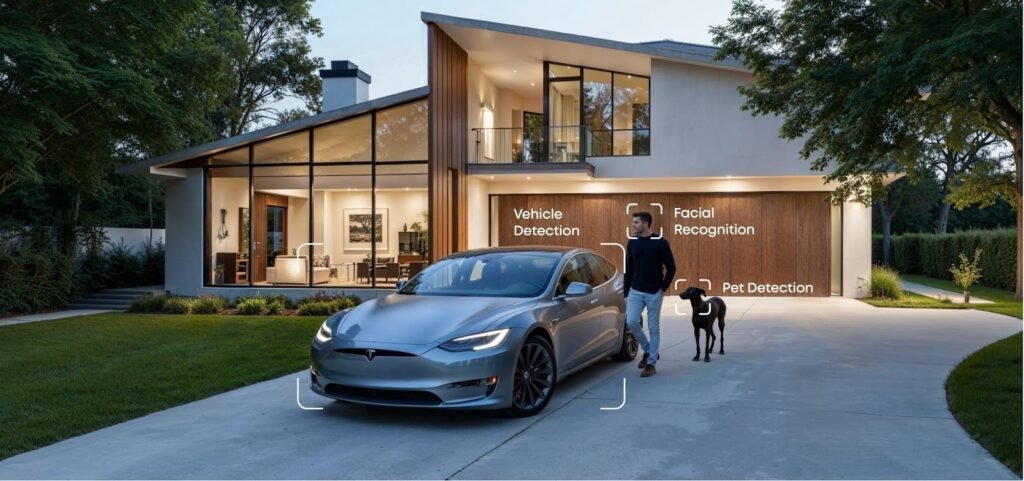
AI-powered detection increases accuracy by recognizing particular items such as people, automobiles, and animals. Unlike traditional motion sensors, AI detection can understand forms and behaviors, allowing cameras to notify only on significant occurrences. For example, it can distinguish between a person approaching the door and a passing automobile or barking dog. This lowers false alerts and helps to prioritize key tasks. Many systems additionally allow users to tailor notifications based on the item type. Some people learn patterns over time. AI-powered features are especially beneficial for residences near busy roads or multi-use areas. They provide better awareness and faster response times, making the security system more helpful and less disruptive in everyday life.
Two-Way Audio, Sirens, and Active Deterrence
Two-way audio allows users to communicate through the camera using a mobile app, which is handy for greeting guests, notifying burglars, and giving delivery drivers instructions. Built-in microphones also collect sound, providing context for video recordings. Many cameras now have loud sirens, flashing lights, or spotlight functions to actively prevent suspicious activity. These deterrents activate when motion or AI detection occurs and may be manually regulated via the app. Active deterrence elevates cameras above their status as passive recorders, transforming them into your first line of defense. When someone realizes they are being observed and hears a voice or siren, they are more likely to flee the location right away.
Conclusion
Not all security cameras are made equal, and the proper features make a significant difference in safety and convenience. High video resolution, great night vision, and extensive coverage guarantee that important details are caught clearly. Motion zoning, AI recognition, and two-way audio are all smart features that assist in eliminating false alarms and enhancing reaction time. Active deterrents such as lights and sirens provide protection beyond passive monitoring. Whether you require surveillance for your home, company, or remote property, choosing a camera with the perfect mix of core and smart functions improves security and peace of mind. Prioritize function over flash when selecting a system that will perform day and night.