Advanced Industrial Materials in Modern Manufacturing
Introduction
The rise of global manufacturing over the past century has been powered by profound progress in material science. Industrial materials—ranging from engineered polymers and advanced composites to surface-responsive films, high-performance coatings, and eco-engineered formulations—are now fundamental pillars of economic and technological development. They influence how products are designed, how efficiently factories operate, and how sustainably industries can grow.
The modern world relies on materials that are significantly more stable, predictable, durable, and environmentally responsible than those used in earlier eras. As industries demand greater efficiency and precision, the development of advanced materials has evolved into one of the most critical scientific domains. Although technical references often highlight specific examples of engineered substances—such as compounds cited within specialized literature including polyvinyl alcohol—the broader and more important story lies in understanding the material ecosystem as a whole.
This research-oriented article examines the evolution, performance attributes, industrial applications, environmental considerations, and future trajectory of advanced materials that drive contemporary global manufacturing.
1. Historical Overview: From Primitive Substances to Engineered Systems
1.1 Early Industrial Limitations
For centuries, manufacturing relied on natural substances: wood, stone, wool, cotton, clay, glass, and metals. These materials were functional for early craftsmanship but suffered from inconsistency, limited mechanical performance, and structural unpredictability.
1.2 Industrial Revolution: Growth Beyond Natural Boundaries
The mechanization of production processes created unprecedented demand for superior materials. Iron, steel, and copper became essential resources, but even these materials faced limitations regarding flexibility, corrosion resistance, and weight efficiency.
1.3 Chemical Innovation and the Emergence of Synthetic Materials
The introduction of synthetic polymers, early plastics, resins, and engineered rubbers transformed industrial capabilities. These materials allowed manufacturers to design substances with consistent quality and controllable properties.
1.4 Modern Material Science and Molecular Engineering
Material science expanded to include:
- surface chemistry
- nanotechnology
- computational modeling
- microstructure engineering
- advanced polymer research
This multidisciplinary progress enabled the creation of materials designed at molecular or atomic scales.
1.5 21st-Century Materials: Precision, Adaptability, Sustainability
Today’s materials combine performance, efficiency, environmental compatibility, and technological adaptability. They support innovation in robotics, aerospace, electronics, biomedicine, and renewable energy.
2. Core Functional Characteristics of Contemporary Industrial Materials
2.1 Mechanical Integrity and Structural Endurance
Industrial materials must tolerate:
- impact
- pressure
- vibration
- abrasion
- structural stress
- long-term usage
High-performance manufacturing relies on reliable material strength, especially in infrastructure, aerospace, and automotive engineering.
2.2 Thermal and Environmental Stability
Materials must maintain structural and chemical stability during exposure to:
- heat
- cold
- humidity
- solvents
- UV radiation
- corrosive environments
Stability is essential in coatings, electronics, adhesives, and protective films.
2.3 Manufacturing Precision and Processing Compatibility
Modern materials must behave in predictable ways during:
- extrusion
- lamination
- coating
- molding
- bonding
- curing
- printing
Predictability ensures consistent production output and minimizes defects.
2.4 Multifunctional Behavior
Advanced materials frequently combine several functional attributes:
- mechanical strength
- moisture resistance
- electrical insulation
- controlled permeability
- chemical resistance
- energy efficiency
Such versatility reduces production complexity and enhances product performance.
2.5 Sustainability Alignment
Environmental standards require materials that:
- reduce emissions
- limit hazardous substances
- support recycling
- lower energy consumption
- biodegrade more effectively
Material science plays a key role in responding to global climate initiatives.
3. Industrial Sectors Distinguished by Material Innovation
3.1 Packaging and Flexible Film Technology
Packaging materials must offer:
- transparency
- tensile strength
- barrier protection
- flexibility
- printability
- recyclability
Material innovation supports food safety, pharmaceutical stability, and logistical efficiency while reducing environmental impact.
3.2 Textile Manufacturing and Fiber Engineering
Advanced materials help improve:
- yarn strength
- weaving efficiency
- fiber durability
- dye absorption
- moisture behavior
Textile producers rely on engineered substances to reduce breakage, improve consistency, and increase production output.
3.3 Adhesives, Coatings, and Surface Engineering
Industrial coatings and adhesives are essential for:
- construction protection
- automotive finishes
- corrosion resistance
- high-strength bonding
- equipment durability
- electrical component insulation
These materials must withstand environmental stress and maintain long-term performance.
3.4 Construction and Civil Infrastructure
Construction materials now include:
- polymer-modified concrete
- reinforcement fibers
- protective membranes
- energy-efficient insulation
- high-strength composites
These materials support safer buildings, resilient infrastructure, and sustainable construction practices.
3.5 Transportation, Aerospace, and Automotive Engineering
High-performance materials enable:
- lightweight structural components
- improved aerodynamic surfaces
- thermal stability
- enhanced mechanical resilience
- compatibility with electric vehicle systems
Material advancements directly influence safety, efficiency, and sustainability in transportation.
3.6 Electronics, Semiconductors, and Microfabrication
The electronics industry requires materials with:
- controlled conductivity
- heat dissipation
- micro-scale processing stability
- insulation reliability
- electrostatic safety
These materials allow for increasingly compact and powerful devices.
4. Technological Drivers of Advanced Material Development
4.1 Digital Simulation and Predictive Material Design
Computational modeling helps researchers forecast how materials will react under specific conditions. This dramatically accelerates innovation and reduces development costs.
4.2 Nanotechnology and Microstructural Innovation
Nanotechnology offers enhancements including:
- improved mechanical strength
- antimicrobial behavior
- advanced barrier performance
- increased conductivity
- thermal control
These breakthroughs benefit industries ranging from healthcare to aerospace.
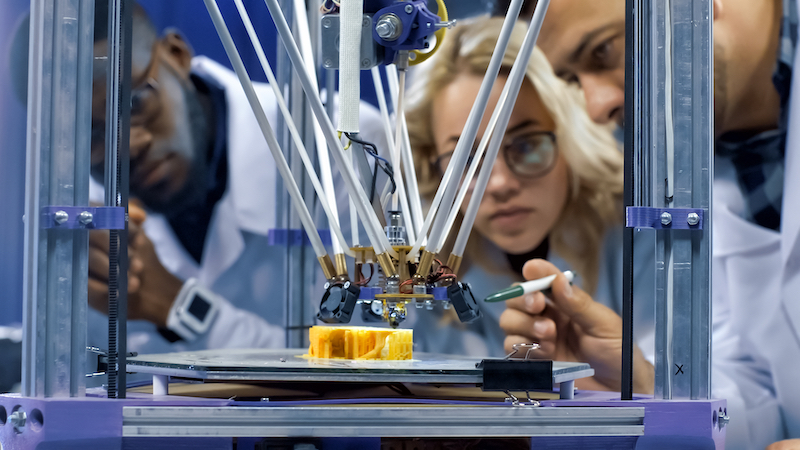
4.3 Additive Manufacturing (3D Printing)
3D printing requires materials designed with:
- balanced viscosity
- rapid curing
- accurate flow characteristics
- structural consistency
This technology enables custom designs and reduces material waste.
4.4 Smart and Adaptive Materials
Smart materials adjust behavior in response to:
- pressure
- temperature
- electrical pulses
- chemical conditions
- light exposure
They are used in robotics, wearable devices, healthcare applications, and aerospace systems.
4.5 Bio-Based Materials and Green Chemistry
Green chemistry seeks to create materials that reduce toxicity and environmental burden. Bio-based substances help industries transition toward renewable production methods.
5. Environmental Considerations in Material Selection
5.1 Regulatory Compliance
Environmental regulations require materials to minimize:
- hazardous chemicals
- harmful emissions
- waste output
- energy-intensive processing
Industries must comply with evolving guidelines across global markets.
5.2 Circular Manufacturing Systems
Circular economy principles include:
- reusability
- recyclability
- resource conservation
- extended product life
- waste reduction
Materials designed for circular systems support long-term sustainability.
5.3 Climate-Driven Demands
Climate change initiatives require manufacturers to improve material efficiency and reduce carbon impact through:
- lighter materials
- lower-temperature processing
- energy-efficient structural components
5.4 Life-Cycle Assessment (LCA) Integration
Life-cycle assessment ensures materials are evaluated across their entire lifespan—from raw extraction to disposal.
6. Economic and Supply Chain Dynamics of Material Implementation
6.1 Global Market Volatility
Material costs fluctuate due to:
- geopolitical instability
- energy shortages
- transportation disruptions
- changes in supply availability
Manufacturers must develop flexible procurement strategies.
6.2 Supplier Reliability and Material Quality Assurance
Industries depend on suppliers for:
- consistent quality
- accurate technical specifications
- timely deliveries
- technical support
Strong supplier relationships ensure stable manufacturing systems.
6.3 Cost-Benefit Optimization
Balancing cost with performance is one of the core challenges in material selection. High-performance materials often justify higher cost through improved lifespan or reduced maintenance.
6.4 Logistics and Storage Conditions
Materials with long shelf life, predictable stability, and minimal storage requirements reduce operational risk.
7. Future Trends in Advanced Material Development
7.1 High-Performance Composite Structures
The future of composites includes:
- lightweight carbon systems
- fiber-reinforced materials
- ultra-durable architectural components
These innovations improve energy efficiency and structural reliability.
7.2 Precision Polymers and Designer Materials
Scientists are designing materials with:
- targeted chemical responses
- optimized viscosity
- custom mechanical behavior
- enhanced environmental performance
7.3 Integration Into Smart Factories
Industry 5.0 requires materials compatible with AI-driven manufacturing systems, robotics, and IoT technologies.
7.4 Innovative Surface Coatings
Surface technology breakthroughs may include:
- self-healing coatings
- anti-corrosion nano-films
- thermal-adaptive surfaces
- UV-protective films
7.5 Materials Supporting Renewable Energy Systems
Future materials will shape batteries, solar panels, wind turbines, hydrogen systems, and sustainable energy infrastructure.
Conclusion
Modern industrial materials have transformed how the world manufactures, builds, transports, and communicates. Their evolution—from primitive substances to scientifically engineered systems—reflects enormous progress in human understanding of chemistry, physics, and engineering. Industrial materials today are more reliable, more precise, more sustainable, and more technologically adaptable than ever before.
As global industries adopt advanced automation, pursue sustainability, and embrace new energy systems, material science becomes even more essential. The next generation of materials will enable the innovation necessary for a high-performance, environmentally responsible future. Through rigorous research, careful engineering, and strategic industrial integration, advanced materials will continue shaping every aspect of modern civilization.