BRCA Gene Testing: How LifeCell Helps Detect Cancer Risk Early
Did you know that some cancers can be linked to “Genes” and that are passed down through families? Yes, one such gene is the BRCA gene, which plays a vital role in determining your inherited risk. And the striking reality is many people are not even aware they carry these genes until a doctor suggests testing often after noticing a pattern of cancer symptoms in the family.
Understanding whether you carry a BRCA gene mutation is not just about knowing your risk; it is about gaining clarity, taking control, and planning with confidence. In this blog, we break it down in a simple, approachable way so you can understand what BRCA means for you and your loved ones.
What is the BRCA Gene?
BRCA genes are also known as tumor suppressor genes, and there are two types of BRCA genes:BRCA1 and BRCA2. They are inherited, one from the father and the other from the mother. These genes. As the name indicates, these genes suppress tumor growth, help repair damaged DNA, and prevent breast, ovarian, and other cells from growing out of control. When there is a change (mutation) in either of these genes, the body’s natural “cancer-prevention system” does not work as effectively. This increases the risk of breast cancer, ovarian cancer, and several other cancer types.
The name BRCA literally comes from the Breast Cancer gene.
What Is BRCA Gene Testing?
When a person inherits a pathogenic (harmful) variant in either BRCA1 or BRCA2, their risk of developing certain cancers, especially breast and ovarian cancers, significantly increases.
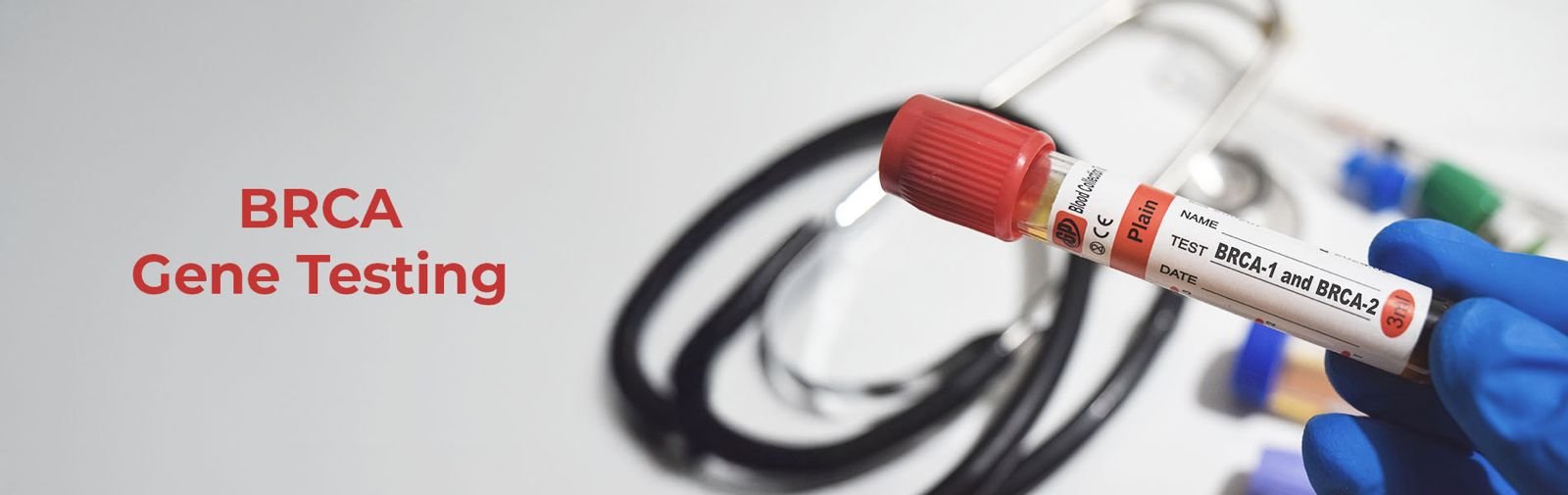
A BRCA gene test is a simple genetic test that detects any harmful mutations. It is done using a small blood sample or, in some cases, a saliva sample, making the process easy, safe, and non-invasive.
Who Should Consider BRCA Testing?
BRCA gene mutations are uncommon; healthcare providers generally do not recommend BRCA testing for everyone. Instead, the test is recommended only when warning signs or family history point to a higher risk of hereditary cancer.
- If you had breast cancer at a young age (before 50).
- Someone in your close family already has a BRCA mutation.
- Several family members have had breast cancer, or a man in the family had breast cancer.
- You are of Ashkenazi Jewish ancestry, where BRCA mutations are more common.
- You or your family members have a history of having multiple cancers, especially at younger ages.
A family history of inherited cancer predisposition syndromes, such as:
- Cowden syndrome
- Fanconi anemia
- Li-Fraumeni syndrome
- Peutz-Jeghers syndrome
What Happens During a BRCA Genetic Test?
A BRCA test identifies whether your DNA carries any mutations in the BRCA1 or BRCA2 genes. The test is quick, safe, and can be done in one of three ways: blood, saliva, or a cheek swab.
- Blood Test (Most Common Method)
A healthcare professional will:
- Insert a small needle into a vein in your arm
- Collect a small amount of blood into a test tube
- Remove the needle within a few seconds
You may feel a brief sting, but the process is quick and normally takes less than 5 minutes.
2. Saliva Test
This is a painless test in which you will either spit into a special collection tube or use a soft pad to collect saliva from inside your mouth
3. Cheek Swab (Buccal Swab)
It is a Painless procedure a healthcare provider or sometimes you yourself, will rub a special swab or brush against the inside of your cheek and collect sample for DNA analysis
Understanding Your BRCA Test Results
Once your sample is analysed, your BRCA test report will fall into one of three categories. Each one tells you something different about your cancer risk:
Negative (Normal) Result
A negative result means no harmful mutations were found in your BRCA1 or BRCA2 genes.
What this means for you depends on two things:
- Your personal history—whether you’ve had cancer before
- Your family history—whether close relatives carry a known BRCA mutation
A negative result doesn’t mean your cancer risk is zero—it simply means your BRCA genes aren’t the cause of increased risk.
Uncertain Result (Variant of Uncertain Significance – VUS)
A VUS result means the test found a change in your BRCA gene, but science isn’t yet sure whether that change is harmful or harmless. Think of it as a “not enough information yet” result.your healthcare provider may reclassify the variant as either normal or harmful.
Positive Result (Likely Pathogenic Variant)
However:
A positive test does NOT mean you will definitely develop cancer.It simply means your risk is higher, and your doctor may recommend:
- Further screening
- Preventive strategies
- Genetic counselling
Why Choose LifeCell Diagnostics for BRCA Gene Testing?
LifeCell Diagnostics offers a reliable, science-backed approach to understanding your hereditary cancer risk. It offers a wide range of BRCA testing panels that fit every person’s health needs. All BRCA testing undergoes processing with the highest accuracy and quality standards in CAP, NABL, and ISO-accredited labs. Their advanced technology ensures comprehensive mutation detection, giving you clear and actionable insights. LifeCell also provides expert genetic counseling to help you understand your results and plan your next steps with confidence. You will receive timely results with a turnaround time of 11-16 days (depending upon the test you choose).
Conclusion:
BRCA gene testing helps you understand your inherited cancer risk long before symptoms appear. By identifying harmful BRCA1 or BRCA2 mutations early, individuals can take proactive steps toward prevention, timely screening, and personalised health planning. Every outcome offers valuable direction for the future, regardless of whether it is uncertain, positive, or negative.
For those seeking accurate and reliable testing, LifeCell Diagnostics provides advanced genetic analysis, supported by expert counseling and a quick 11-day reporting timeline. Their comprehensive approach ensures that you receive accurate results and helps you with the timely intervention.