How to Optimize Your Fertilizer Blending Plant for Maximum Output & Consistency
Running a fertilizer blending plant efficiently is no longer just about producing volume. In today’s competitive fertilizer market, success depends on output consistency, operational stability, and the ability to adapt quickly to changing customer needs. Many plants struggle not because of demand, but because their systems are not fully optimized. By refining processes, upgrading control strategies, and aligning equipment correctly, a fertilizer blending plant can achieve higher throughput while delivering uniform, reliable products. This is where a well-designed Fertilizer Blending Plant System becomes a critical advantage.
Understanding Optimization in a Fertilizer Blending Plant
Optimization begins with understanding how each part of the fertilizer blending plant interacts with the rest. Blending accuracy, material flow, batching precision, and equipment coordination all affect final output quality. Even small inefficiencies can lead to segregation, inconsistent nutrient ratios, or unnecessary downtime.
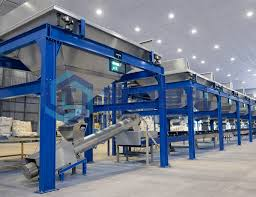
A modern Fertilizer Blending Plant System focuses on balance. It ensures that raw materials are fed smoothly, weighed accurately, mixed thoroughly, and discharged consistently. Cementl emphasizes this system-level approach, recognizing that true optimization is achieved when the entire fertilizer blending plant works as one integrated unit.
Improving Raw Material Handling for Stable Output
Raw material handling is often underestimated, yet it directly impacts consistency. Different fertilizers have different flow characteristics, moisture sensitivity, and particle sizes. If these factors are not managed properly, the fertilizer blending plant may experience blockages, uneven feeding, or material loss.
An optimized Fertilizer Blending Plant System uses properly designed storage bins, controlled discharge mechanisms, and smooth transfer points. Cementl designs material handling solutions that reduce segregation and maintain steady flow, allowing the fertilizer blending plant to operate at higher capacity without sacrificing blend quality.
Enhancing Batching Accuracy and Control
Batching is the foundation of product consistency. Inaccurate weighing leads to nutrient imbalance, which affects crop performance and customer trust. To optimize batching, a fertilizer blending plant must use reliable weighing systems and responsive control software.
Automation plays a key role here. A Fertilizer Blending Plant System with automated batching reduces human error and allows precise control over formulation changes. Cementl integrates intelligent control systems that monitor batching performance in real time, ensuring that every blend meets specification even at maximum output levels.
Optimizing Mixing Performance for Uniformity
Mixing quality defines the reputation of a fertilizer blending plant. Poor mixing results in uneven nutrient distribution, regardless of how accurate the batching may be. Optimizing mixing involves selecting the right mixer type, adjusting mixing time, and maintaining consistent feed rates.
A well-optimized Fertilizer Blending Plant System ensures that materials enter the mixer evenly and exit as a homogeneous product. Cementl focuses on mixing efficiency rather than excessive mixing force, which helps preserve granule integrity while achieving uniform blends. This balance allows the fertilizer blending plant to increase output without compromising quality.
Reducing Downtime Through Preventive Maintenance
Maximum output is impossible without reliability. Frequent breakdowns or unplanned maintenance disrupt production schedules and increase operating costs. Optimization includes establishing preventive maintenance routines and using durable equipment designed for continuous operation.
Cementl emphasizes long-term reliability when designing a Fertilizer Blending Plant System. Easy access to wear parts, simplified maintenance procedures, and robust construction help fertilizer blending plant operators reduce downtime and maintain consistent production rates.
Using Data and Automation to Drive Continuous Improvement
Data-driven decision-making is becoming essential for plant optimization. Modern control systems provide insights into production speed, material usage, and blending accuracy. A fertilizer blending plant that uses this data effectively can identify bottlenecks and adjust operations proactively.
A digitally integrated Fertilizer Blending Plant System allows operators to fine-tune parameters and improve efficiency over time. Cementl incorporates automation features that support continuous improvement, helping fertilizer blending plant owners stay competitive as market expectations evolve.
Scaling Output Without Losing Consistency
Many plants face challenges when increasing capacity. Higher throughput often exposes weaknesses in layout or equipment coordination. True optimization ensures that a fertilizer blending plant can scale output smoothly.
Cementl applies modular design principles to the Fertilizer Blending Plant System, allowing capacity expansion without disrupting existing operations. This approach ensures that consistency is maintained even as production volume grows.
Conclusion: Building a High-Performance Blending Operation
Optimizing a fertilizer blending plant is a strategic process that combines smart design, accurate control, reliable equipment, and continuous monitoring. When these elements come together within a well-engineered Fertilizer Blending Plant System, the result is higher output, consistent product quality, and stronger profitability.
By working with experienced solution providers like Cementl and focusing on system-level efficiency, fertilizer blending plant operators can transform their facilities into high-performance assets. In an industry where consistency defines credibility, optimization is not optional—it is the key to long-term success.